
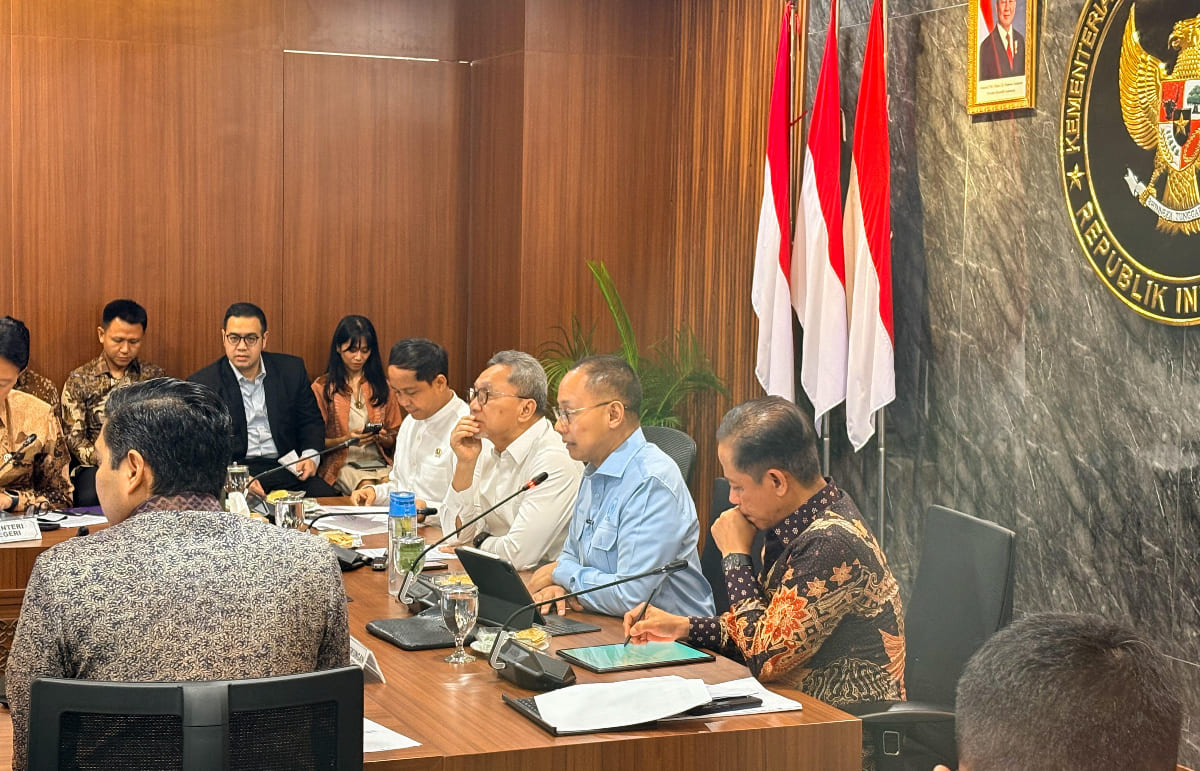
President Prabowo Subianto signed Presidential Regulation (Peraturan Presiden/Perpres) No. 110 of 2025 on 10 October 2025. The regulation governs the Implementation of Carbon Economic Value Instruments and National Greenhouse Gas Emission Control, replacing Perpres 98/2021, and contains 9 chapters and 103 articles (Source: BPK – peraturan.bpk.go.id)
Perpres 110/2025 redraws Indonesia’s carbon governance in three concrete ways. It splits the registry function into two separate systems, one for climate actions and one for carbon units. It opens carbon ownership and trading to private actors. And it decouples voluntary carbon trading from the country’s NDC timeline, which in effect lifts the de facto moratorium that had limited international voluntary credit sales since 2022 (Source: SSEK Law Firm).
The rest of this article discusses what changed, what it means for businesses, investors, and local governments, and what to do in the next 12 months.
Quick Glossary
Indonesian carbon regulation runs on acronyms. Here are the ones you need before reading further.
- NEK (Nilai Ekonomi Karbon/Carbon Economic Value) → Indonesia’s official term for carbon pricing
- GHG/GRK (Greenhouse Gas/Gas Rumah Kaca) → the emissions in scope
- SRN PPI (Sistem Registri Nasional Pengendalian Perubahan Iklim) → National Registry for climate-change mitigation and adaptation actions, administered by the Ministry of Environment (KLH)
- SRUK (Sistem Registri Unit Karbon) → Carbon Unit Registry administered by Otoritas Jasa Keuangan (OJK), the Financial Services Authority
- SPE-GRK (Sertifikat Pengurangan Emisi Gas Rumah Kaca) → GHG Emission Reduction Certificate, Indonesia’s domestic carbon credit unit
- MRV (Monitoring, Reporting, Verification) → the audit chain behind any credit
- ITMO (internationally Transferred Mitigation Outcomes) → Article 6.2 cross-border emission reductions under the Paris Agreement
- KLH (Kementerian Lingkungan Hidup) → Ministry of Environment (formerly KLHK; split from forestry in November 2024)
- ESDM (Kementerian Energi dan Sumber Daya Mineral) → Ministry of Energy and Mineral Resources
- APBN/APBD (National / Regional government budgets) → Public funding lines
Understanding Nilai Ekonomi Karbon (NEK)
Nilai Ekonomi Karbon, or NEK, is the legal mechanism that assigns an economic value (a price) to greenhouse gas emissions. Its purpose is to incentivise emission reductions and make low-carbon investment competitive against business-as-usual.
Under Perpres 110/2025, NEK is implemented through four main instruments:
- Carbon trading (Perdagangan Karbon), covering both cap-and-trade and offset transactions.
- Carbon levy (Pungutan atas Karbon), the carbon tax framework administered by the Ministry of Finance.
- Results-based payments (Pembayaran Berbasis Kinerja) including REDD+ outcome-based finance.
- Other mechanisms, an open category that allows flexibility as policy and technology evolve.
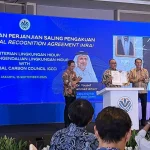
Perpres 98/2021 established Indonesia’s first NEK framework. By 2025, it had been overtaken by events: the IDXCarbon exchange had launched (26 September 2023), and Indonesia had signed Mutual Recognition Agreements with the JCM (Japan, October 2024), Gold Standard (May 2025), Global Carbon Council and Plan Vivo (September 2025), and Verra (October 2025). The 2021 regulation contemplated none of these.
The government concluded that Perpres 98/2021 was no longer aligned with current legal and societal needs. Perpres 110/2025 is the response: a more mature, integrated framework built for a market that already exists.
What Changed: Perpres 98/2021 vs Perpres 110/2025 Side by Side
Nine changes matter most:
1. Strategic framing
- Perpres 98/2021: Emission control to meet NDC targets.
- Perpres 110/2025: National carbon economy as a fiscal, trade and green-development instrument.
2. NEK instruments
- Perpres 98/2021: Carbon trading, results-based payments, and carbon levies.
- Perpres 110/2025: Adds offsets, SPE-GRK certification, carbon allocation, and innovative mechanisms (e.g., tokenisation).
3. Registry
- Perpres 98/2021: Single SRN as a data centre for mitigation actions.
- Perpres 110/2025: Dual registry: SRN PPI (climate actions, KLH) + SRUK (carbon units, OJK).
4. Governance
- Perpres 98/2021: KLHK-led.
- Perpres 110/2025: National Steering Committee on NEK & GHG, with KLH, ESDM, Finance, Bappenas, Trade and others.
5. Local government role
- Perpres 98/2021: Implementers.
- Perpres 110/2025: Planners, implementers and evaluators of mitigation and adaptation.
6. Private participation
- Perpres 98/2021: Mitigation activities only.
- Perpres 110/2025: Ownership, trading and use of carbon units; full participation in offset mechanisms.
7. MRV (Monitoring, Reporting, Verification)
- Perpres 98/2021: Fragmented sectoral systems.
- Perpres 110/2025: Integrated MRV across all NEK instruments.
8. Financing
- Perpres 98/2021: APBN / APBD and donations.
- Perpres 110/2025: Adds green finance, blended finance, carbon tax revenue, and carbon credit trading.
9. Transition
- Perpres 98/2021: No transition timeline specified.
- Perpres 110/2025: All existing systems must align within one year of enactment.
A tenth shift sits underneath the table and is worth naming. It replaces the concept of Hak Atas Karbon (carbon rights, treated as state property) with Alokasi Karbon (carbon allocation). Allocation goes to actors who do the work, rather than being reserved for the state. This is the legal change that makes most of the others possible.
Why the Dual Registry Matters
Of the nine changes, the registry split is the one most market participants will encounter directly.
- SRN PPI stays under KLH (the Ministry of Environment). It records mitigation and adaptation actions and feeds Indonesia’s NDC accounting under the Paris Agreement.
- SRUK, the new layer, sits under OJK (the Financial Services Authority). It records the units themselves: how they are issued, who holds them, who buys and sells them, and when they are retired or transferred.
Treating climate-action accounting and carbon-unit accounting as separate functions, supervised by different agencies, is what makes traceable, verifiable transactions possible at scale. It is also the mechanism that prevents double-counting between domestic and international markets.
Implications of Perpres 110/2025
1. For Businesses: Carbon Markets as Both Compliance and Opportunity
Companies can now own, trade, and use carbon units directly through SRUK, and participate formally in offset mechanisms. In practical terms this means:
- New revenue lines from carbon offset projects, credit issuance, and trading.
- Financial incentives for decarbonisation. The lower a company’s emissions, the more allocation headroom it has to monetise.
- Stricter reporting and verification. MRV becomes the credibility floor, not a nice-to-have.
- A first-mover advantage. Companies that build inventory and verification capacity now will be the credit sellers later.
2. For Local Governments: From Implementers to Active Planners
Perpres 110/2025 mandates regional governments to prepare Local Climate Mitigation Action Plans, monitor implementation, and evaluate outcomes. The practical openings:
- Potential for regional carbon initiatives, though formal cross-province trading remains to be set out in technical guidance.
- New local revenue streams from offsets and SPE-GRK certification of forestry, peatland, or renewable energy projects within their jurisdictions.
- A growing need for technical capacity in carbon accounting, verification, and reporting at the provincial and district level.
3. For Investors and Carbon Market Participants
Clearer legal foundations and transparent registries reduce two of the biggest historic risks: ownership disputes and unverifiable issuance. Specifically, Perpres 110/2025 decouples voluntary carbon trading from the NDC timeline. Projects can issue and sell credits without waiting for Indonesia’s national mitigation accounting cycle to close. This effectively lifts the moratorium on international voluntary credit sales that had constrained the Indonesian market since 2022.
Investors can engage through:
- Green finance and blended finance instruments.
- Direct equity or offtake participation in verified carbon projects.
- Article 6 of the Paris Agreement, including ITMO transactions where bilateral arrangements (e.g., the JCM with Japan) are in place.
These changes strengthen Indonesia’s claim to be Southeast Asia’s primary carbon market, and the most plausible source of high-volume, MRA-recognised credits in the region.
Roadmap: What to Do in the Next 12 Months
Perpres 110/2025 sets a one-year transition window for existing systems to align. The work below is what most participants need to start now to be ready inside that window.
1. Conduct Emission Audits and Carbon Risk Mapping
- Build an inventory of current GHG emissions (Scope 1, Scope 2, and the relevant Scope 3 categories).
- Identify the largest emission sources and the highest-impact reduction opportunities.
- Model future carbon allocation scenarios under different policy and price paths.
- Quantify the risks: excess emissions, carbon-cost exposure, and compliance gaps.
2. Develop Mitigation and Adaptation Strategies
- Choose technologies or processes to reduce emissions: energy efficiency, fuel switching, low-carbon power, methane abatement, carbon capture and storage.
- Identify carbon projects that can generate tradable units under Verra (VCS), Gold Standard, or domestic SPE-GRK pathways.
- Build an implementation roadmap with named owners, timelines, and budgets.
3. Establish Reporting, Verification, and Registry Workflows
- Align internal data systems with the technical guidelines that will follow Perpres 110/2025.
- Prepare MRV documentation that can withstand third-party verification.
- Get familiar with how SRUK records and manages carbon units for trading.
- Plan integration with the relevant national systems.
4. Track Emerging Regulations and Technical Guidance
- Watch for the implementing regulations that the government must issue within 12 months of 10 October 2025.
- Follow OJK’s SRUK rollout and the Ministry of Environment’s SRN PPI updates.
5. Build the Right Collaborations
- For local governments: convene regional emission reduction forums, map area-based carbon potential (forestry, peatland, renewable energy, urban transport), and engage indigenous and local communities early.
- For companies: identify project partners, line up credit offtake arrangements, and design genuine community benefit-sharing into the project from day one. Social legitimacy is what keeps a credit saleable on international markets.
What It Does and Does Not Solve
Perpres 110/2025 is the legal architecture, not the technical detail. The market still needs:
- Implementing regulations from KLH, OJK, the Ministry of Finance, and ESDM, due within 12 months.
- Technical methodologies for sectors that are still underserved, including peatland rewetting, blue carbon, and biochar.
- Resolution of legacy disputes (the Rimba Raya REDD+ project licence revocation, for example, was overturned by the Jakarta State Administrative Court in July 2024 and remains a reference point for project developers).
The regulation moves Indonesia from a state-controlled carbon-rights regime to an allocation-based market that private actors can transact in. That is a structural shift. The next 12 months will determine how far the market actually moves.
Frequently Asked Questions
- When was Perpres 110/2025 signed?
President Prabowo Subianto signed Perpres 110/2025 on 10 October 2025. - What does it replace?
It replaces Perpres 98/2021 on the Implementation of Carbon Economic Value (Penyelenggaraan Nilai Ekonomi Karbon). - What is the difference between SRN PPI and SRUK?
SRN PPI (Sistem Registri Nasional Pengendalian Perubahan Iklim) records climate-change mitigation and adaptation actions and is administered by the Ministry of Environment (KLH). SRUK (Sistem Registri Unit Karbon) records the carbon units themselves (issuance, ownership, transactions) and is administered by OJK, the Financial Services Authority. - What is Nilai Ekonomi Karbon (NEK)?
NEK is Indonesia’s framework for assigning an economic value to greenhouse gas emissions. Under Perpres 110/2025 it is implemented through four instruments: carbon trading, a carbon levy, results-based payments, and other mechanisms. - How many chapters and articles does the new Perpres contain?
Nine chapters and 103 articles. - What is the deadline for compliance?
Existing systems must align within one year of the regulation’s enactment, i.e., by 10 October 2026. The government must issue implementing regulations within the same window. - Does it lift the moratorium on international carbon credit sales?
In effect, yes. By decoupling voluntary carbon trading from the NDC timeline, Perpres 110/2025 allows projects to issue and sell credits internationally without waiting for the national NDC accounting cycle to close.
If your organisation needs to align its emissions inventory, MRV system, or project pipeline to Perpres 110/2025 inside the 12-month window, get in touch with the TruCarbon team. We work with project developers, IDX-listed companies, and local governments on exactly this transition.